A Steady Approach, Built Together

What shared work on eating habits can look like

Why Partnership Beats Ready-Made Plans

A nutrition plan handed down from above, without context about your life, rarely sticks. Real change happens through dialogue—where we listen to what actually works for you, adjust when it doesn't, and build something realistic together.

When nutrition feels like a conversation instead of a prescription, you're no longer trying to fit yourself into a framework. Instead, the framework bends to fit your life: your schedule, your preferences, your pace, your needs.

Partnership means both sides bring something. You know your body, your habits, your barriers, and what matters most to you. We bring structure, clarity, and the ability to help you see patterns you might miss on your own. Neither side works alone.

Read the explanation

What You Bring vs What the Nutritionist Brings

What You Bring

  • Honesty – About what you actually eat, how you feel, what feels impossible
  • Patience with yourself – You know your own pace and limits
  • Willingness to try – To adjust, experiment, and see what works
  • Follow-through – The actual living of the habits, day by day
  • Feedback – Telling us what's working and what isn't

What We Bring

  • Structure – A clear framework for thinking about eating habits
  • Expert perspective – Knowledge of nutrition and behaviour change
  • Adaptation – Adjusting recommendations based on your real life
  • Accountability – A steady presence as you make changes
  • Support – Both practical help and encouragement

About TriAdapt

TriAdapt is an advisory, nutrition-focused blog project that works in partnership with people through dialogue, adaptation, and steady support. We believe that sustainable change doesn't come from restrictive rules or quick fixes—it comes from understanding, adjustment, and realistic progress.

We focus on everyday eating habits, the rhythms that make food feel easier, and choices that align with your values without extremes. There's no medical framing, no pressure, and no promises of transformation. What we offer is clarity about how nutrition actually works in real life—and how to build habits that last.

Our approach recognises that you're an expert in your own life. We're here to offer perspective, tools, and support as you navigate the day-to-day reality of eating well, feeling good, and moving forward at your own pace.

Building Your Day Rhythm

Your day has a natural rhythm: energy peaks and troughs, times of focus and times of depletion. Eating in sync with this rhythm, rather than fighting it, makes everything easier.

Most of us eat on autopilot or when stress hits—not because we're hungry, but because that's when we've always eaten. Building a rhythm means noticing: when do you actually feel hungry? When are you most tired? When do you eat from boredom or stress? Once you see the pattern, you can work with it instead of against it.

A steadier rhythm often starts with a simple anchor: breakfast at roughly the same time, regular breaks in the day, perhaps a light snack when energy dips. These aren't rigid rules—they're frameworks that help your body know what to expect.

Shopping and Simple Defaults

One of the most underestimated tools for eating better is the shopping list. It shifts the decision-making to a calmer moment—at home, not in the supermarket when you're tired—and creates friction against impulse.

Simple defaults matter: the foods you keep in your cupboard, the snacks you have on hand, what you automatically reach for. When better choices are easy to grab, you don't need willpower. When worse choices require effort, you naturally make fewer of them.

This isn't about restriction. It's about making your environment work for you. Stock your kitchen with things that feel good to eat, that are easy to prepare, and that align with how you want to nourish yourself. No strict rules. No "forbidden" foods. Just thoughtful defaults.

Eating Out Without Overthinking

Eating out can feel fraught when you're paying attention to how you nourish yourself. But it doesn't have to be complicated. In fact, overcomplicating it usually backfires.

The key is knowing what matters to you. Are you looking for something satisfying? Protective of certain boundaries? Just wanting to relax and enjoy the experience? Once you're clear on your priority, the decision becomes simpler.

Restaurant meals are occasional events, not the sum total of your eating. Enjoy them without guilt or strict calculation. The habits you build at home—your regular rhythm, your shopping choices, your defaults—these are what add up over time. A meal out is just a meal out.

Four Quiet Cues

These principles guide the partnership:

Partnership is a process

Real change doesn't happen in a single conversation. It unfolds over time, through regular check-ins, adjustments, and deepening understanding of what actually works for you.

Adjusting is part of the path

The first recommendation might not be perfect. That's expected. We refine, adapt, and try again. Each adjustment teaches us more about your situation and what's realistic for you.

Understanding matters more than speed

Slow change that makes sense to you is better than quick change that you don't believe in. When you understand why something matters, you're more likely to actually do it.

Consistency is built in small moments

You don't need a dramatic overhaul. Small, repeated choices—the breakfast you have most days, the snack you reach for, the time you sit down to eat—these add up to real change over weeks and months.

Questions to Reflect On Before You Start

  1. What does "feeling well" actually mean to you? Not weight, not appearance—what does good feel like in your body and your day?
  2. What's one eating habit that would make the biggest difference if it changed? What's realistic for you to change first?
  3. What usually gets in the way? Stress, time, not knowing what to cook, old patterns? Name the real barriers.
  4. What support would actually help? Structure, accountability, permission to be imperfect, or something else?
  5. What are you willing to prioritise right now? You can't change everything at once. What matters most?

Discover the approach

Practice: Everyday Scenes

Real eating happens in real life. Here's what it looks like in practice.
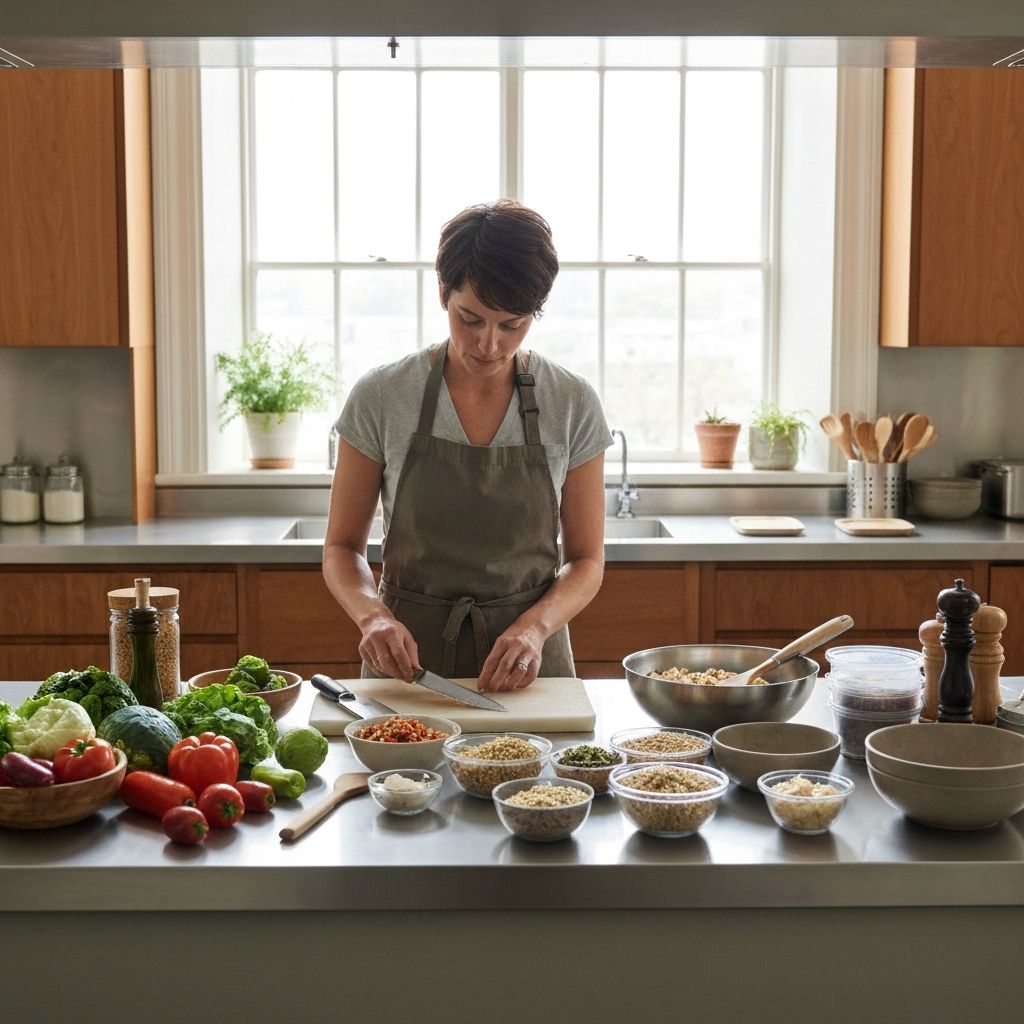
Person planning and preparing a weekday lunch in a calm kitchen with fresh ingredients and meal containers

Planning a Weekday Lunch

When you know what you're having, lunch stops being a stressful decision and becomes routine. This might be as simple as prepping one component the night before, or keeping reliable ingredients on hand.

Person grocery shopping with a list, thoughtfully selecting fresh produce and items in a well-lit supermarket

Shopping With Intention

A list is a simple tool that removes decision fatigue and creates a boundary against impulse. When you shop from home, calm and clear, you're much more likely to have the foods you actually want to eat.

Person sitting relaxed at a café table with a warm drink and light snack, enjoying an unhurried moment

Taking a Real Break

Food isn't just fuel. Sometimes it's permission to pause, to step away from the day's rush, and to sit with a warm drink and a moment of quiet. This is nutrition too.

People gathered around a home dinner table sharing a meal together, smiling and enjoying each other's company

Sharing a Meal

Eating with others—without overthinking it, without calculation—is nourishing in ways that food alone isn't. Connection, ease, and the simple pleasure of sharing food: these are part of it.

Person walking outdoors in a park during golden hour, moving slowly and peacefully after work

Movement Without Force

A walk after work, unhurried and just because it feels good. Movement is part of wellbeing, but it doesn't need to be intense or punishing. Gentle, regular, and integrated into your day works too.

Learn more

Get in Touch

TriAdapt

Get Updates

Join our newsletter for guidance on eating habits and sustainable wellness practices.

Thank you for signing up. You'll hear from us soon.
Note: This form is used only for informational newsletter purposes. We do not sell your information directly.
Health Disclaimer: The information presented on this site is exclusively informational in character and is not medical advice, diagnosis, treatment, or professional medical consultation. For medical concerns, please consult a qualified healthcare professional.